
As software systems evolve into Ultra-Large-Scale (ULS) systems, their impacts extend beyond traditional technical boundaries and increasingly impact individuals, society and the environment. Evolving regulatory frameworks increase the need for transparent measurement and accountability for those impacts across complex software ecosystems. Using Uber’s ride-hailing platform as a case study, this paper examines software sustainability in ULS systems as a multi-dimensional concept based on the principles of the Brundtland Report and the Karlskrona Manifesto. Particular attention is given to valuechain emissions, cloud and data center efficiency, user device impacts, algorithmic decision-making and the relationship between software design and stakeholder well-being. The analysis highlights that sustainability improvements in ULS systems require considering interactions between technical quality, environmental responsibility, economic viability and social consequences, rather than optimizing individual aspects in isolation. The paper concludes that sustainable software engineering requires interdisciplinary collaboration between industry, research and societal stakeholders.
Introduction
In a study by Rusu et al. [1], 73% of participants reported that the digitization of public and private services makes their lives easier by improving access to work, education, shopping, communication and communities. As digital services are becoming increasingly integrated into everyday activities, the software systems supporting those services have grown beyond the scale of traditional software applications. They increasingly involve distributed infrastructures, interconnected components and a wide range of stakeholders whose interactions influence the overall system behavior.
Ultra-large-scale (ULS) systems are highly complex sociotechnical ecosystems that go beyond the boundaries of traditional large systems or systems-of-systems. They are characterized by decentralized control, heterogeneous components and diverse requirements. Furthermore, such systems blur the boundary between people and technology, since individuals are seen as elements of the system and have an effect on its overall behavior [2]. As these systems are constantly changing and evolving, navigating their inherently conflicting, unknowable and diverse requirements [2] demands understanding their broader impact on society and the environment, in order to make informed and responsible design choices. Consequently, the defining characteristics of ULS systems create distinctive sustainability challenges that extend beyond purely technical concerns.
Unlike traditional software systems, sustainability in the ULS context cannot be managed by a single system owner. Decentralized control distributes responsibility across platform operators, infrastructure providers, users, regulators and affected communities. Environmental and social impacts often arise from interactions between technical components and human decision-making rather than from individual software functions. Therefore, sustainability in ULS systems faces both a technical and an organizational challenges that can involve trade-offs between technical, environmental, economic, individual and social objectives but can also produce overlapping benefits across multiple dimensions.
Ride-hailing platforms, such as Uber, present a good example of the sustainability challenges that ULS systems face. These platforms rely on automated matching algorithms, continuous data processing, and massive end-user device ecosystems. Because their business models are based on independent contractors, the bulk of their environmental footprint manifests as Scope 3 emissions, which are strongly influenced by platform dispatch algorithms and user behavior. Simultaneously, these platforms are facing a growing number of compliance requirements. New frameworks, like the European Union’s Corporate Sustainability Reporting Directive (CSRD) and California’s SB 253 climate disclosure laws, are legally forcing digital enterprises to measure, report and mitigate their valuechain impacts.
This work provides a multi-dimensional analysis of sustainability within the context of ULS systems, using the ridehailing platform Uber as its primary case study. It examines how the defining characteristics of ULS systems shape sustainability challenges across technical, environmental, economic, individual and social dimensions and how these challenges are influenced by evolving regulatory requirements.
The remainder of this paper is organized as follows: Section II explores the conceptual foundations of sustainable development. Section III outlines the regulatory landscapes across the world with a focus on the European Union and the United States. Section IV establishes the multi-dimensional framework of software sustainability. Section V addresses the structural overlaps and trade-offs between these dimensions. Section VI provides an outlook on sustainable software engineering and Section VII concludes the paper.
Sustainability
The modern definition of sustainable development originates from the Brundtland Report [3], published in 1987 by the World Commission on Environment and Development. It articulated that sustainable development must “meet the needs of the present without compromising the ability of future generations to meet their own needs” and reframed economic growth from an ecological threat into a potential solution for sustainability.
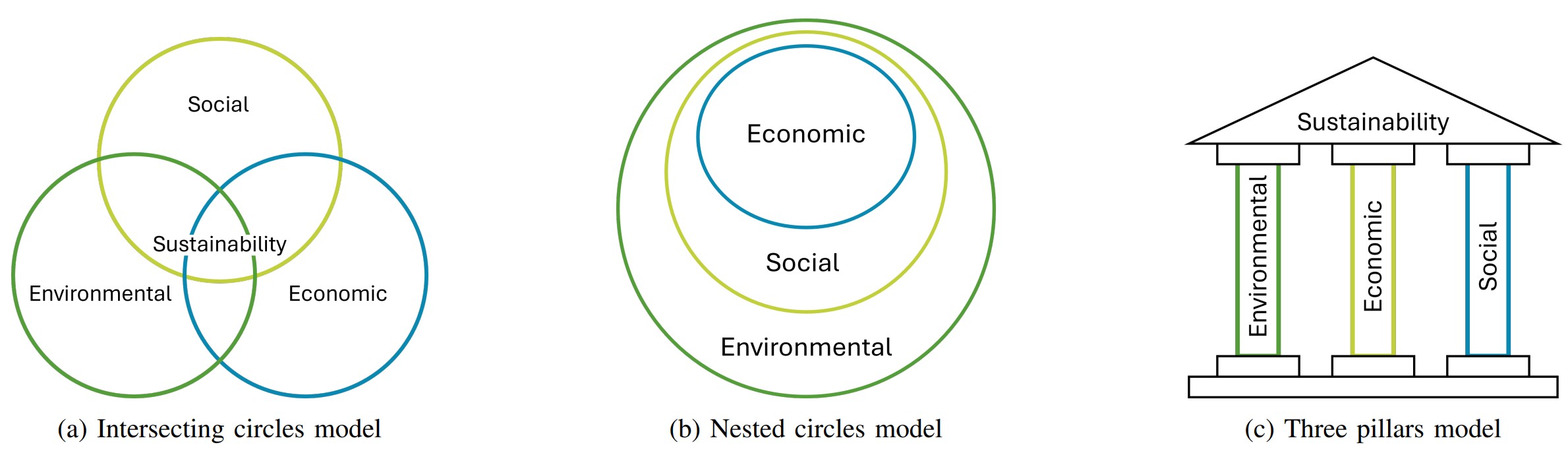
As explained by Purvis et al. [4], the Brundtland Report implicitly introduces three dimensions of sustainability (economic, environmental and social). As can be seen in Fig. 1, the relationship between these dimensions has been a subject of different conceptualizations. The most famous model consisting of three intersecting circles with overall sustainability located at the center looks at the distinct goals of each dimension as needed to be integrated through tradeoffs. Alternatively, the nested circles approach addresses the structural dependency between these domains by placing the economy and society as contained within and constrained by the environment. The third framework is illustrated as a literal architectural structure where social, environmental and economic pillars stand independently to support overarching sustainability, emphasizing the need to maintain all three foundational supports equally. Although these conceptualizations differ in how they describe the relationships between the three dimensions, they all recognize sustainability as a systemic concept in which decisions affecting one dimension influence the others.
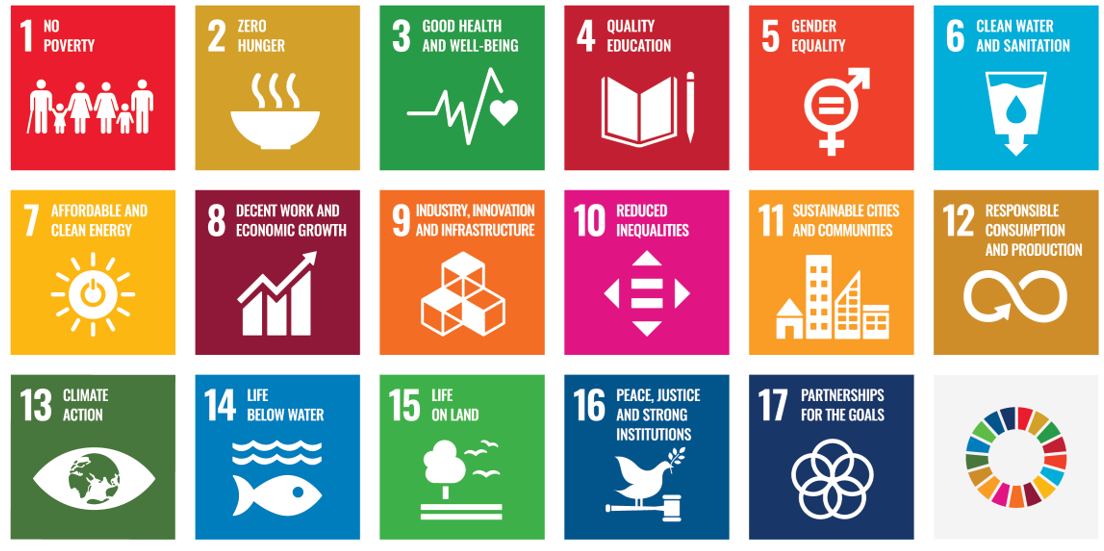
Turning these conceptual perspectives into actionable objectives, in 2015 the United Nations adopted the 2030 Agenda for Sustainable Development [5]. The agenda introduced the 17 Sustainable Development Goals (SDGs) (see Fig. 2) as a global framework for addressing the interconnected environmental, social and economic challenges through international collaboration and an integrated approach [6]. Together, the SDGs provide a shared vision for sustainable development and have since guided governments, organizations and businesses in defining sustainability strategies and shaping the regulatory frameworks that increasingly influence software-intensive systems.
Regulatory Landscapes
A major motivator for the introduction of sustainability measures within the enterprises behind ULS systems are the laws and regulations that influence these companies. This chapter first introduces the Carbon Dioxide Equivalent and the Greenhouse Gas (GHG) Protocol, which form the foundation for most environmental reporting regulations, and then provides an overview of the key sustainability regulations relevant to ride-hailing services and their software systems.
The Carbon Dioxide Equivalent and The Greenhouse Gas
Protocol
To effectively enforce sustainability regulations and evaluate environmental impacts, organizations require standardized methods to quantify their carbon footprints. At the core of these environmental assessments is the Carbon Dioxide Equivalent (CO2e), which expresses emissions as the equivalent mass of CO2 over a 100-year time horizon [8]. This standardization is necessary because gases differ in their warming potential. For example, methane (CH4) has approximately 28 times the global warming potential of carbon dioxide (CO2) [9].
While CO2e provides a unified physical metric for gas equivalence, translating these calculations into organizational accountability requires structuring where and how these emissions originate across a business ecosystem. To establish this operational structure and prevent double-counting across complex value chains, organizations rely on the Greenhouse Gas (GHG) Protocol Corporate Standard [10], established in 2001. The framework categorizes corporate emissions into three distinct Scopes:
- Scope 1 (Direct Emissions): Emissions generated directly from sources owned or controlled by the reporting organization [10]. For ride-hailing services like Uber this could be for example the emissions from fuel burned in company-owned or leased test vehicles or gas burned to heat corporate offices.
- Scope 2 (Indirect Purchased Energy Emissions): Offsite emissions generated by utility providers supplying grid electricity, heating or cooling to power corporate operations [10]. Some examples in the context of softwaredriven enterprises are the emissions from electricity used to power corporate offices and on-premise servers.
- Scope 3 (Value Chain Emissions): Upstream and downstream indirect consequences of a company’s business activities that occur within third-party infrastructure [10]. In the case of the ride-hailing services, those include the Uber drivers’ tailpipe emissions and emissions from thirdparty cloud infrastructure.
For asset-light digital services, Scope 3 often represents most of the total carbon emissions. In the case of ridehailing platforms, most are specifically reported under Scope 3, Category 11 (Use of sold products), which includes the vehicle emissions generated during trips provided by contracted drivers. As can be seen in Table I, over 99% of Uber’s reported GHG emissions fall under that category [11].
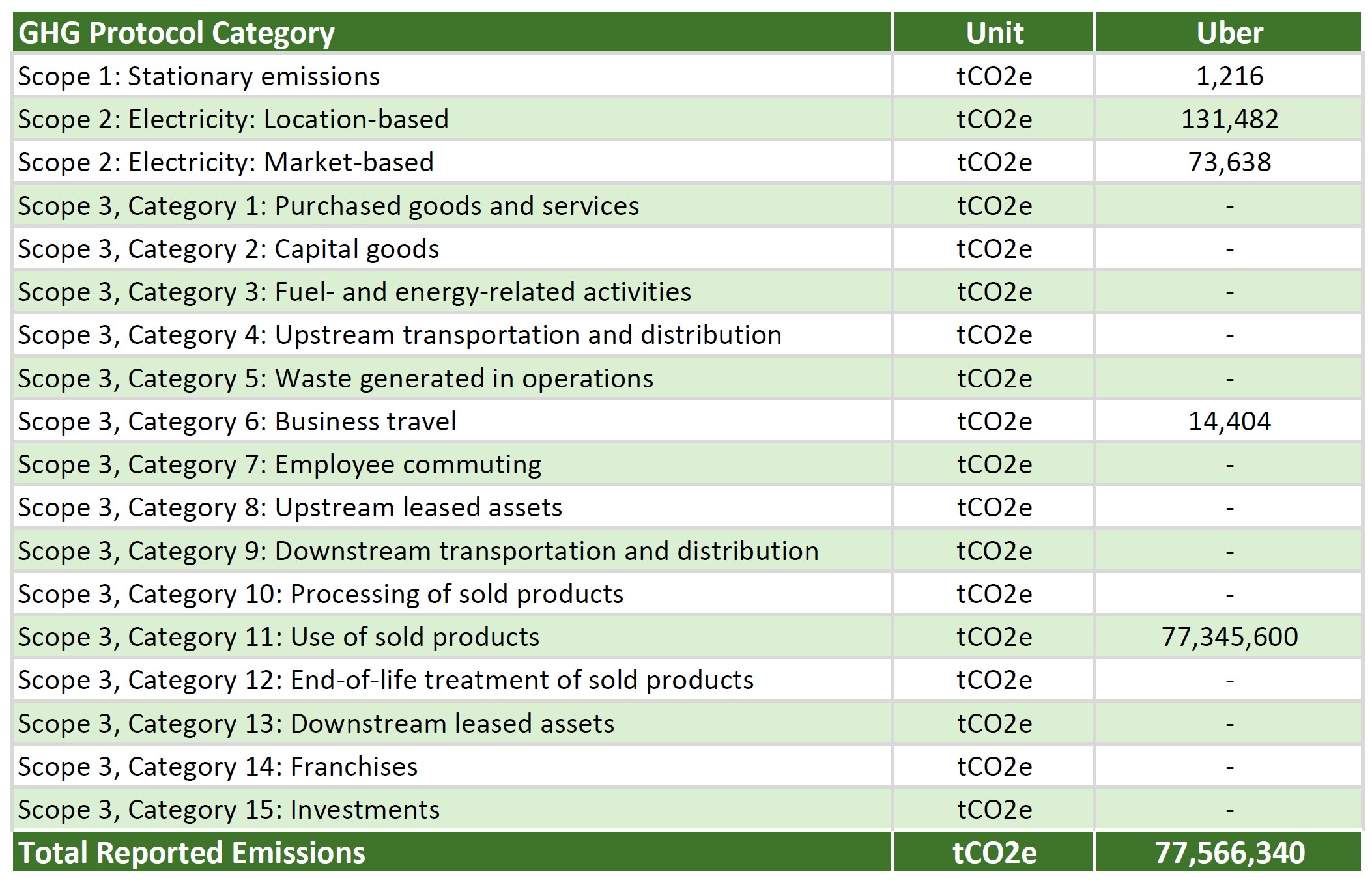
This distribution exemplifies the sustainability challenges that ULS systems face. Although Uber does not directly own the vehicles responsible for these emissions, the platform architecture influences how these vehicles are utilized through automated dispatching algorithms, dynamic pricing mechanisms and driver incentive structures. These software-driven decisions affect factors such as vehicle utilization, idle time, route selection and driver behavior, thereby indirectly shaping the environmental impact of the overall system. Consequently, responsibility for sustainability in ULS systems cannot be assigned to a single system owner, but is distributed across platform operators, infrastructure providers, users and other stakeholders whose interactions collectively determine system outcomes.
What is also important to note is that Uber does not yet report Scope 3 Category 1 (Purchased goods and services), under which emissions from third-party cloud provider services would fall. Looking at their competitor Lyft, this category constitutes approximately 6% of the total reported emissions [12], since the company relies entirely on cloud services [13]. While Uber has historically hosted 95% of its services on premise [14], in 2023 the company began migrating parts of its infrastructure to cloud providers such as Oracle Cloud Infrastructure and Google Cloud Platform [15]. Therefore, reporting Scope 3 Category 1 emissions is becoming ever more necessary to provide a complete representation of the sustainability impact of Uber’s ULS system and its dependencies on third-party infrastructure. Furthermore, since Uber operates at a much larger scale than Lyft, its carbon footprint from cloud services will represent a much higher absolute volume of emissions.
Regulatory Drivers for Software Sustainability
While sustainability regulations primarily target organizations as a whole, they increasingly influence how softwareintensive systems are designed, operated and evaluated. This is particularly important for ULS systems because their impacts are not limited to the boundaries of one organization.
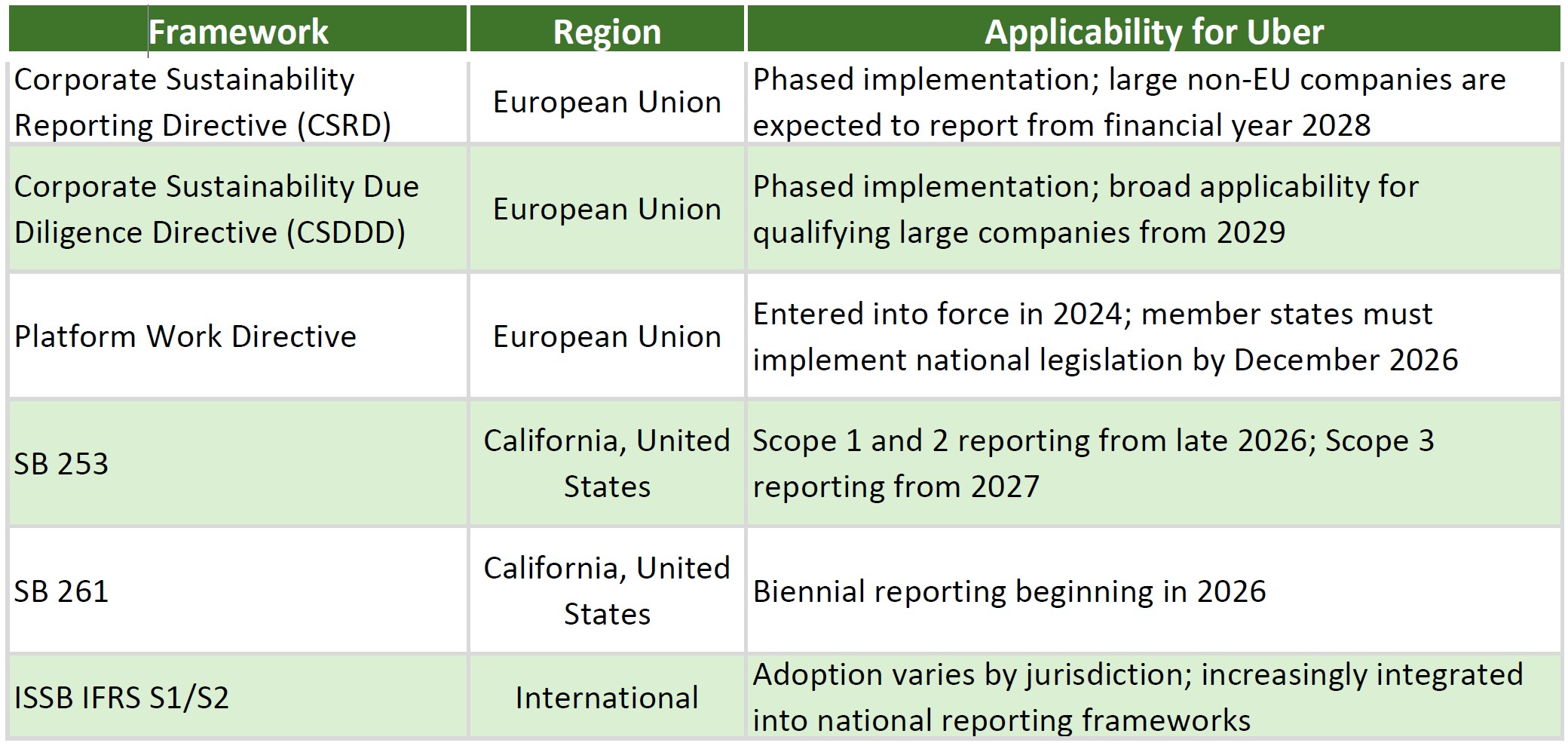
Table II gives an overview of the sustainability regulations relevant specifically to ride-hailing platforms like Uber. Environmental reporting frameworks require honesty regarding distributed carbon emissions, platform work regulations address the social consequences of algorithmic decision-making and due diligence frameworks expect actions for mitigating valuechain impacts. Together, these regulations reinforce the need for software engineering approaches that support transparency, accountability and long-term sustainability across complex socio-technical ecosystems.
Software Sustainability
The Karlskrona Manifesto for Sustainability Design [24] emphasizes that sustainability extends beyond non-functional requirement to a systemic, multi-dimensional concern and analyzes software sustainability through five interconnected dimensions: technical, economic, individual, social and environmental. This chapter examines each of these dimensions and their relevance to ULS systems.
While all dimensions are important for sustainable software design, the environmental dimension receives particular attention in this work. This focus is motivated by the significant environmental impact of large-scale digital platforms, the increasing regulatory pressure surrounding carbon emissions and the availability of established frameworks for measuring and reducing environmental impacts.
The Technical Dimension
Technical sustainability refers to the ability of a software system to remain operational, adaptable and effective over an extended period despite changing requirements, technologies and operating environments [25]. It builds on traditional software quality attributes, such as maintainability, reliability and scalability, and evaluates them from the perspective of longterm system viability
When architecting a ULS system, developers must actively address key design questions: How will upcoming changes in the operating system or runtime affect system maintenance? What design choices can enhance the system’s ability to adapt to new user behaviors? What systemic workloads are expected and how can the software scale dynamically without consuming excess hardware resources? [26]
To help answer these questions, software engineering provides established practices and standards for maintaining longterm system quality. Resources such as Clean Code by Robert C. Martin [27] offer practical guidance for improving software maintainability. Additionally, international standards such as ISO/IEC 25010 [28] define software product quality characteristics, while ISO/IEC 25023 [29] provides metrics for evaluating these characteristics.
The Economic Dimension
Economic sustainability focuses on maintaining economic capital and ensuring that systems can continue to generate value throughout their lifecycle. It requires that the resources consumed to develop, operate and maintain a system do not exceed the value the system creates, preserving the ability of future stakeholders to also benefit from it [30].
Among the sustainability dimensions, the economic dimension is often the most established and directly considered within organizations, as companies traditionally evaluate decisions based on financial profitability [31]. Commonly used economic performance indicators include revenue generation, profitability and return-based measures such as return on investment (ROI). However, economic sustainability extends beyond short-term financial performance by considering whether an organization can maintain its ability to create value over time. This requires balancing current financial objectives with long-term investments, adaptability and resilience against future changes [32].
In software engineering, this involves designing systems whose long-term maintenance costs, operational expenses and required investments remain balanced with the value they provide to users, organizations and the broader ecosystem [25], [26]. In ULS software systems, achieving economic sustainability is particularly challenging because decisions optimized for current business objectives can create unforeseen long-term costs or negative impacts elsewhere in the system. For example, reducing operational costs through aggressive resource optimization may improve short-term profitability. However, if these savings are achieved at the expense of investment in system quality, they can increase technical debt, raise future maintenance costs and reduce the system’s ability to adapt to evolving requirements.
The Individual Dimension
The individual dimension focuses on maintaining human capital, which includes the health, knowledge, skills and capabilities of individuals. This dimension considers factors such as physical, mental and emotional well-being, education, professional development and access to essential services. Maintaining human capital requires continuous investment throughout an individual’s lifetime to preserve and develop their capabilities over time [30].
In software development, this requires establishing workflows that foster long-term developer satisfaction and protect teams from burnout [25]. The Agile Manifesto [33] approaches provide practices that can contribute to this goal by emphasizing collaboration, autonomy, continuous feedback and sustainable working patterns. However, these Agile methods only contribute to individual sustainability when implemented with a focus on maintaining developer well-being rather than solely increasing delivery speed.
Individual sustainability in the context of platform-based ULS systems extends beyond the internal software development teams to the people whose work is shaped by these systems – the drivers. Their physical, mental and economic health can be directly influenced by software design decisions. For instance, a Human Rights Watch survey reports that 67% of gig platform workers struggle to afford food and 75% struggle to afford housing [34], showing how platform architectures can shape the baseline livelihood of their workforces. Some questions that software development teams should consider to address such issues are: How can the software improve or worsen a person’s well-being? How can it make a person feel less exposed to harm? How can the person understand system decisions, express concerns or seek representation? [26].
A central issue in individual sustainability for the drivers is worker classification. Many platforms classify drivers as independent contractors rather than employees, which can limit access to employment-related protections such as employerprovided health insurance, paid leave, income stability and workplace safety regulations. At the same time, platform software can introduce forms of algorithmic management that resemble traditional employment structures, including automated pricing, performance monitoring and account deactivation decisions [35].
Additionally, the design of platform software can introduce individual risks through opaque and frequently changing algorithms, automated account deactivation without human review and continuous monitoring of worker activity [36]. These mechanisms can reduce transparency, autonomy and the ability of workers to challenge decisions, demonstrating how software systems can create systemic labor risks when human impact is not considered during design. In ULS systems, these challenges are intensified by the scale of automated decision-making and the distributed nature of responsibility. A single algorithmic decision can be comprised of millions of system interactions, while affected individuals often have limited visibility into the underlying system logic or access to the organizations responsible for these decisions.
From a software perspective, improving individual sustainability then requires designing systems that are transparent, supportive and responsive to the needs of different user groups. For Uber, this includes making algorithmic decisions easier to understand, providing clear explanations for account restrictions and offering accessible channels for human support and appeals. Software can also be used to improve working conditions by allowing users to communicate preferences, such as workload expectations, and by introducing safety features that help workers report risks during their activities.
The effectiveness of these measures can be evaluated through both qualitative and quantitative indicators. Relevant metrics include worker satisfaction surveys, perceived transparency of algorithmic decisions, response times for support requests, number of successful appeals after automated decisions, workload stability and reported safety incidents. Continuously collecting feedback from affected groups is essential for dentifying problems and adapting the system. For example, feedback from drivers can be collected through surveys and other feedback mechanisms directly integrated within Uber’s applications.
The Social Dimension
Social sustainability focuses on preserving social capital, community solidarity and the core structural frameworks of civil society [30]. Software platforms significantly influence how groups form, how trust develops between citizens and businesses and how communities interact [25], [26].
Large-scale ride-hailing systems provide a clear example of these dynamics. In this context, social sustainability can be assessed using metrics such as accessibility of services, traffic congestion and community well-being. While Uber claims that its platform helps reduce traffic and improve city spaces [37], real-world data reveals complex outcomes across different geographies:
- United States (New York): Notable drops in central business district travel speeds, alongside increased cruising emissions from unbooked vehicles and shifts away from public mass transit [38].
- Europe: Reduction in overall traffic congestion, though this effect is weaker in areas with heavy government regulations and significant primarily in higher-density cities [39].
- Brazil: Shift away from public transit, which has contributed to municipal funding deficits [40].
While in Europe algorithmic management helps reduce traffic, in the United States and Brazil it presents as a structural conflict between short-term commercial gains and long-term public infrastructure health. At first glance, these findings appear contradictory. However, as Fageda [39] explains, European cities often have strong public transport systems and stricter regulations, meaning ride-hailing is more likely to complement public transport or replace private cars and taxis rather than act as a substitute for mass transit. These results suggest that there is no single solution for all cities. Therefore, improving social sustainability in ride-hailing ULS systems requires localized measures. In some cities, this may involve implementing vehicle caps or congestion charges to reduce traffic in densely populated areas, while in others that could mean adjusting the carpooling algorithms to adhere to local regulations and to integrate with public transport.
The Environmental Dimension
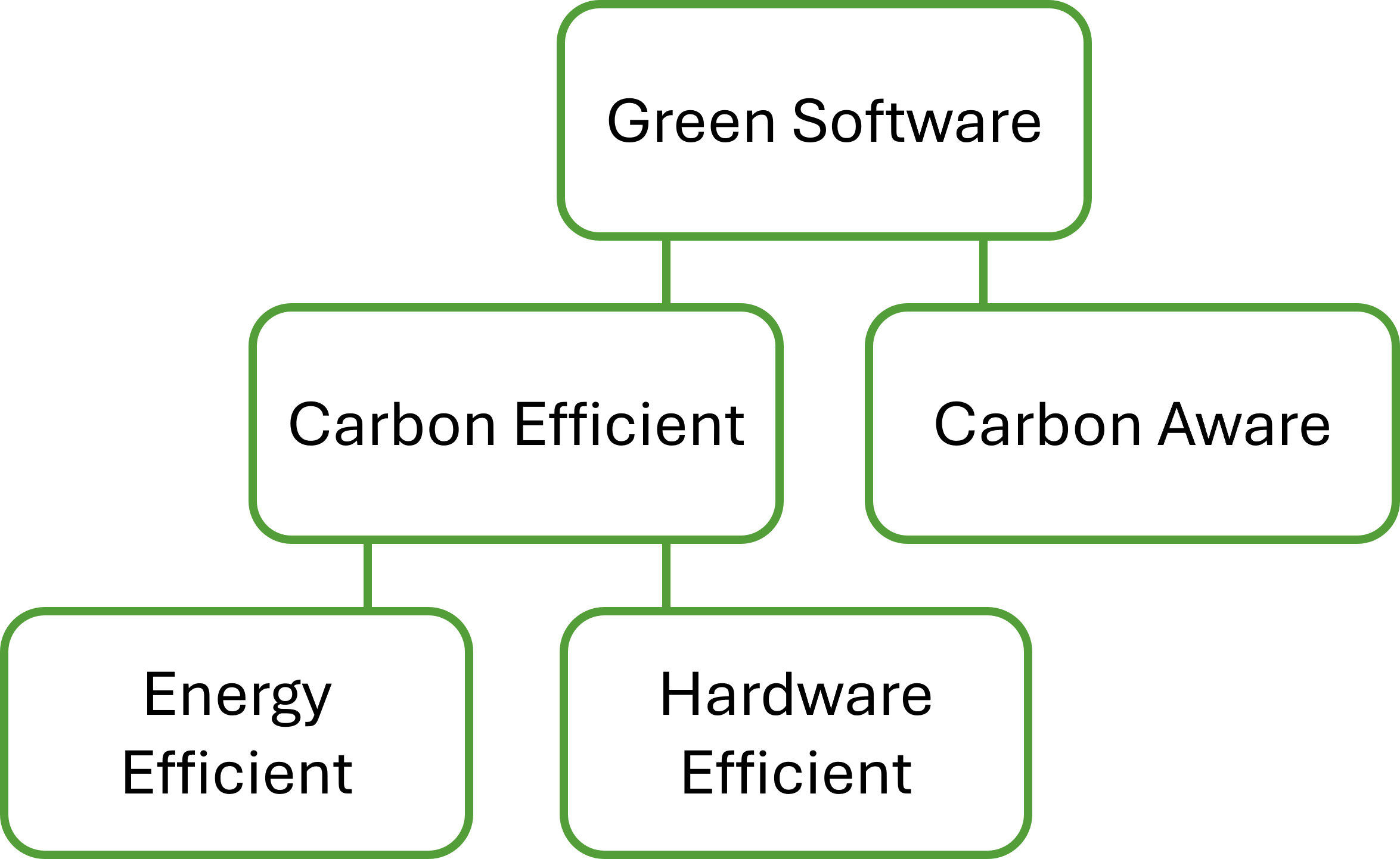
The environmental dimension focuses on preserving natural resources [30]. Environmentally sustainable (or green) software is software that emits as little carbon as possible. This in turn can be achieved through three activities (see also Fig. 3) [8], [41]:
- Energy Efficiency: Minimizing the energy required to execute computing processes.
- Hardware Efficiency: Optimizing software to reduce the amount of physical hardware required, thereby minimizing the embodied carbon generated during manufacturing.
- Carbon Awareness: Adjusting software behavior dynamically based on the carbon intensity variations in the electrical grid.
The carbon intensity of software can be measured using the Software Carbon Intensity (SCI) specification [42]:
SCI estimates the carbon emissions associated with a software unit by relating the energy consumed by the software (E), the carbon intensity of the used electricity (I) and the embodied emissions associated with the required hardware (M) to the defined functional unit (R). It provides a softwareoriented perspective that allows developers to evaluate how architectural and implementation decisions can influence the carbon intensity of software systems. However, such software metrics should be considered together with infrastructure ones (discussed in Section IV-E2), as environmental sustainability is impacted by both software and the infrastructure on which it operates [26].
Before targeting optimizations within a specific digital platform, examining the data on global ICT emissions (see Fig. 4) can help with identifying areas, where interventions can yield the greatest reduction in environmental impact. Based on the framework by Malmodin et al. [43], the ICT sector is categorized into four primary domains:
- User devices: Personal communication and localized endpoint hardware like smartphones, laptops and IoT modules.
- Networks: Public data transmission infrastructures including mobile (2G–5G) and fixed broadband systems.
- Enterprise networks: Private localized systems like LANs and WLANs used in business environments.
- Data centers: Centralized computing facilities housing servers, storage and supporting infrastructure.
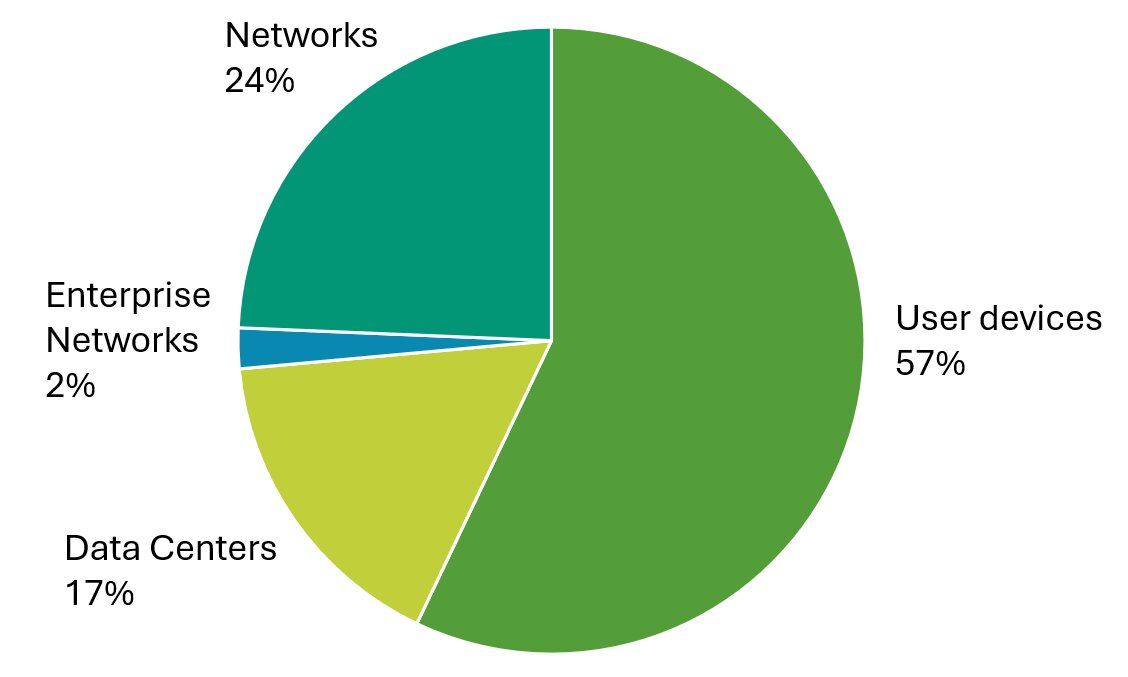
For the remainder of this section the focus would be on minimizing the emissions from user devices and data centers as public data transmission infrastructures are hard to influence from the perspective of ride-hailing service and there is no available information regarding the existence and state of Uber’s enterprise networks.
User Devices
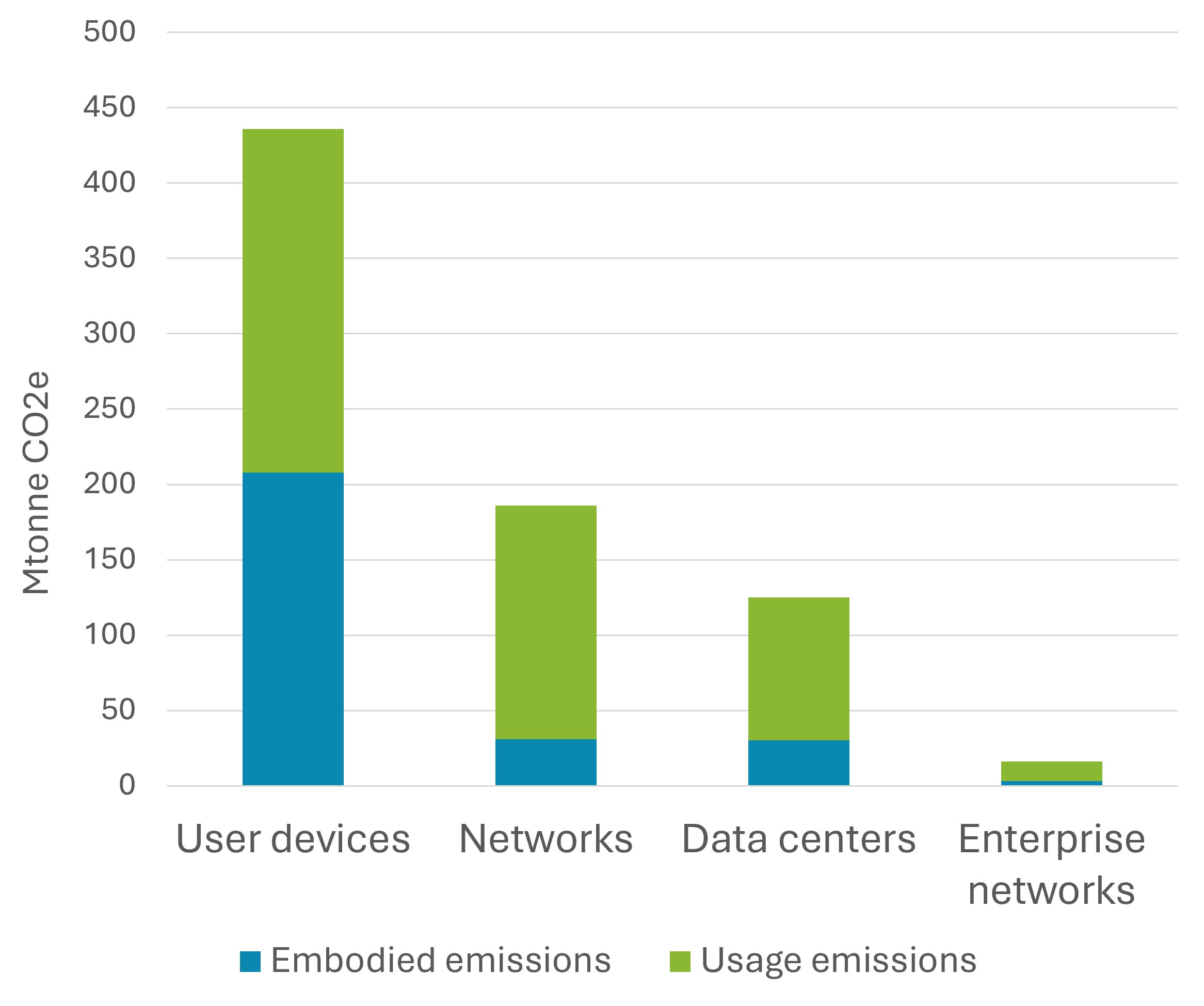
Fig. 5 shows that compared to other areas of the ICT sector, a substantially larger portion of of user device emissions are embodied, meaning they were generated during hardware manufacturing and end-of-life processing [8]. One way for platforms like Uber to address those emissions from a software perspective is to make sure that their applications remain backward compatible [8], [44], which helps prevent premature hardware obsolescence and does not force users to discard still functioning hardware.
Focusing on minimizing the carbon emissions generated by user devices during the usage of an application, the first step would be to understand where those emissions come from in the specific context. For Uber that entails measuring the carbon emissions of both their web and mobile applications and testing not only static page loads but also whole user journeys. Since the carbon measurement landscape is constantly evolving, a useful resource could be the overview of available tools provided by the Bundesverband Green Software [45].
Based on the results from the measurements, the areas with the greatest impact for the specific application can be identified and prioritized. Development teams can then select appropriate optimization techniques from established green software catalogs according to their system context and technical expertise [46]–[51]. Common measures include implementing dark themes, optimizing media compression, disabling video autoplay and caching static assets to reduce data transfer and energy consumption.
Data Centers
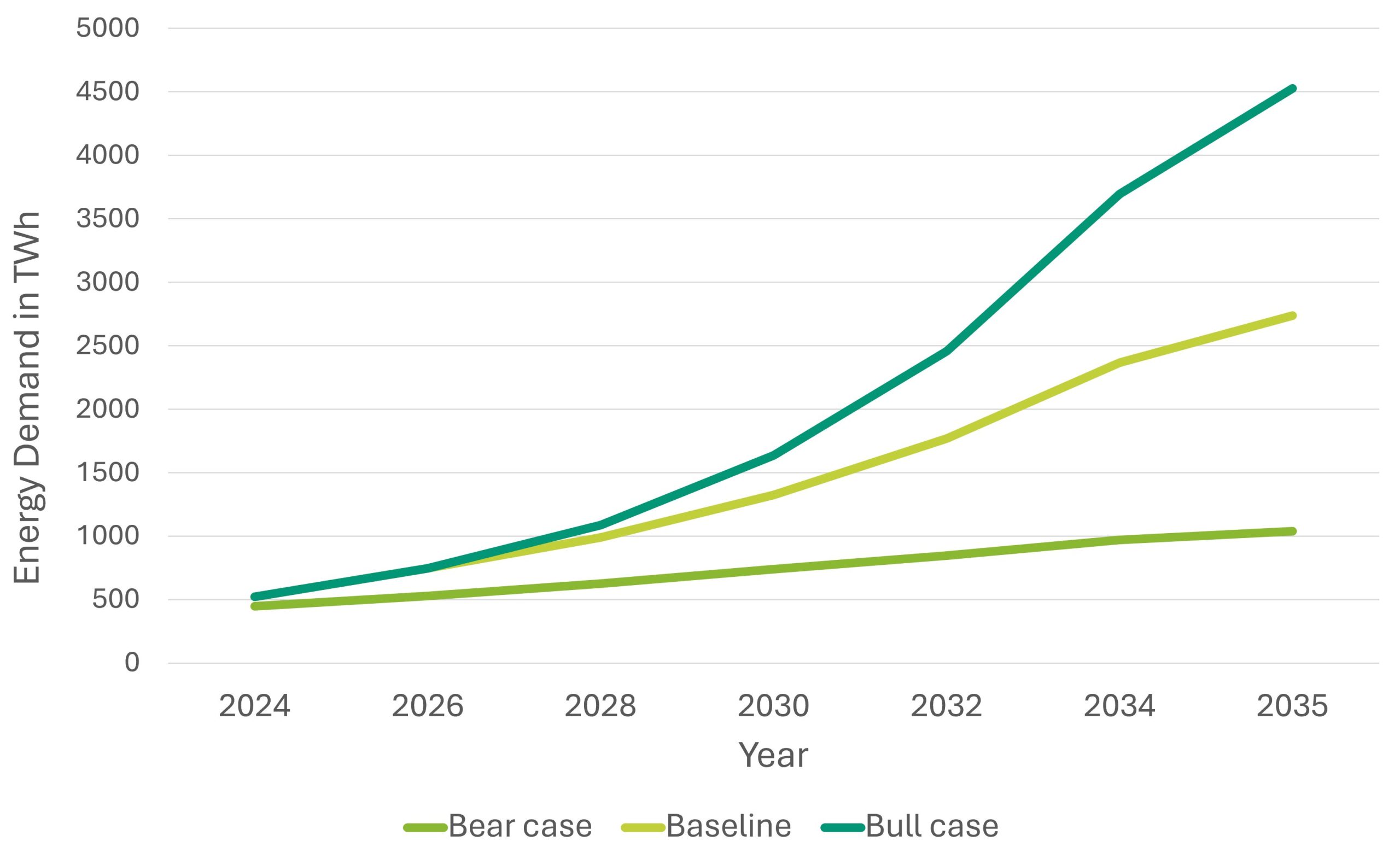
Although data centers currently account for only 17% of ICT greenhouse gas emissions [43], their environmental impact is expected to grow rapidly as demand for cloud services and artificial intelligence continues to increase. As shown in Fig. 6, the electricity demand of data centers is projected to increase two- to ninefold by 2035 depending on market adoption [53]. This makes improving the sustainability of data centers an increasingly important aspect of green software engineering.
Data center efficiency has historically relied on Power Usage Effectiveness (PUE), defined by international standard ISO/IEC 30134-2 [54]:
For example, a facility consuming 150 MWh to deliver 100 MWh of compute power has a PUE of 1.5:
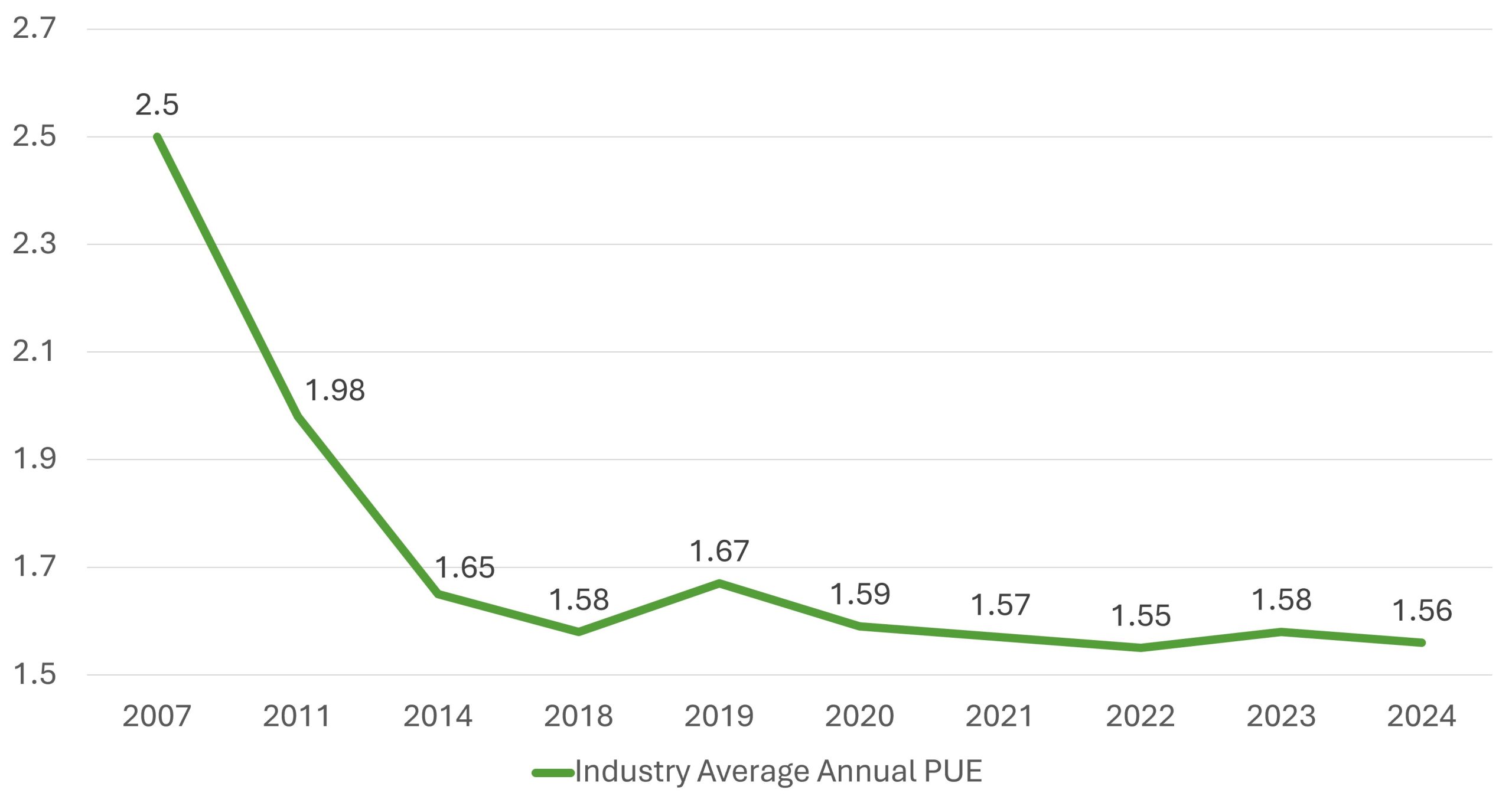
While data center optimization has reduced the global industry average PUE from 2.5 in 2007 to roughly 1.56 by 2024 [55], Fig. 7 shows that these improvements have begun to plateau. Furthermore, PUE alone does not capture inefficient or underutilized servers or the carbon intensity of the electricity used. For a more complete assessment, organizations should also consider metrics such as Water Usage Effectiveness (WUE), Energy Reuse Effectiveness (ERE) and Carbon Usage Effectiveness (CUE) [56].
As most greenhouse gas emissions from data centers occur during usage rather than manufacturing [43] (see Fig. 5), reducing operational energy consumption should be the primary focus. Common measures include right-sizing resources, reducing server idle time, delaying non-urgent workloads until grid carbon intensity is lower (time shifting) and routing workloads to regions currently supplied by cleaner electricity (location shifting) [8]. To make effective use of these techniques, ULS architectures should enable applications to scale, adapt to changing conditions and efficiently use available computing resources.
Beyond architectural design, organizations should also consider the carbon intensity of the electricity used to power the cloud providers and hosting locations they select [8]. Renewable energy can be obtained through different mechanisms that vary considerably in their environmental impact and credibility, ranging from direct renewable generation and power purchase agreements to renewable energy certificates and carbon offsets [44], [60], [61]. Because of this, resources such as the Green Web Foundation’s Green Web Dataset [62] can help organizations verify providers’ environmental credentials.
In Uber’s case, the ride-hailing service relies on Oracle Cloud Infrastructure (OCI), Google Cloud Platform (GCP) and Amazon Web Services (AWS) for its growing cloud infrastructure [15], [16]. All of zjese providers already offer sustainability reporting tools [57]–[59]. A practical first step for the Uber could be to enable these services and use their reports to identify opportunities for improvement.
Intersections of Software Sustainability Dimensions
Similar to what was discussed in Section II, software engineering decisions often influence multiple sustainability dimensions simultaneously. This requires software engineers to balance technical, environmental, economic, individual and social objectives rather than focusing a single aspect in isolation. While the previous section discussed the software sustainability dimensions individually, the following examples illustrate how the sustainability dimensions are closely interconnected and can challenge and reinforce one another.
At the algorithmic layer, software design choices can influence technical, environmental and economic sustainability. For example, Uber’s H3 spatial indexing system replaces more complex geographic calculations with an efficient grid-based approach, allowing location-based operations to be performed faster and with fewer computing resources [52]. In this case, H3 contributes to economic sustainability by improving resource efficiency, while also supporting technical sustainability through increased scalability. Additionally, it can contribute to environmental sustainability by reducing the energy (and with it the emissions) required for computation. However, because of rebound effects improved computational efficiency does not always reduce the overall environmental impact. By lowering computational costs and improving responsiveness, more efficient software may encourage greater platform usage and higher overall demand, offsetting the environmental benefits.
The overlap between individual and environmental sustainability can be observed in the relationship between user experience (UX) design and sustainable user behavior. Software systems can influence whether environmentally sustainable choices are accessible and practical for users. In the ridehailing context, this is exemplified by Uber’s already existing measures of promoting shared rides and lower-emission travel options through the user interface [11]. However, encouraging shared rides, for example, may reduce emissions but can increase travel times and reduce privacy for users. Therefore, sustainable UX design requires considering both environmental benefits and the individual needs of users such as autonomy, convenience and accessibility.
The economic sustainability of digital platforms is closely connected to their impact on workers and the communities in which they operate. Long-term platform viability requires considering individual well-being and social infrastructure as factors that influence the system. For ride-hailing platforms, collaboration with local governments can support this balance by enabling better integration with public transport systems, improving urban mobility planning and using shared data to address infrastructure challenges. Such cooperation can also improve public trust and regulatory relationships while supporting the platform’s long-term economic sustainability.
Individual, technical and environmental sustainability are also connected through the knowledge and practices of software development teams. Since architectural decisions influence the environmental impact of software systems, developers require sufficient knowledge to consider sustainability implications during the design process. Organizations can support this by providing training and professional development opportunities in sustainable software engineering, improving both individual capabilities and the environmental and technical performance of developed systems.
Finally, collaboration between industry and research organizations can support multiple sustainability dimensions by enabling knowledge exchange and continuous improvement. Participation in scientific conferences, research collaborations and industry initiatives related to sustainable software engineering allows organizations to incorporate emerging knowledge into their development practices. At the same time, these activities contribute to individual sustainability by supporting the continuous development of technical expertise among the participating professionals.
Outlook
The increasing scale and complexity of software-intensive systems require a continued evolution of sustainability practices within software engineering. Future approaches must move beyond isolated optimization techniques and adopt a systemic perspective that considers the interactions between technical architectures, environmental impacts, economic constraints and social consequences. For ULS systems, this includes improving methods for measuring sustainability impacts across distributed infrastructures, user devices, supply chains and human stakeholders.
A key area for future development is the integration of sustainability considerations into standard software engineering processes. Similar to existing quality attributes such as performance, security and maintainability, sustainability needs to become a regular part of system design, implementation and evaluation. This requires improved measurement frameworks, automated analysis tools and architectural guidelines that allow developers to evaluate the long-term consequences of their decisions.
Furthermore, as regulatory requirements continue to expand, organizations will require more transparent and reliable methods for reporting sustainability impacts across their value chains. This will increase the importance of standardized metrics and collaboration between software engineers, sustainability experts, researchers and policymakers. For ULS systems such as ride-hailing platforms, future sustainability improvements will depend on cooperation with external stakeholders, including infrastructure providers, governments and affected user groups.
Continued exchange between industry and academia will be essential to address emerging challenges caused by increasing computational demands, particularly from artificial intelligence and large-scale cloud infrastructures. Research into carbon-aware computing, sustainable system architectures and human-centered platform design can provide the foundation for developing digital systems that remain technically capable while reducing their negative impact on the environment and society.
Conclusion
This paper examined sustainability in Ultra-Large-Scale (ULS) systems through the case study of Uber’s ride-hailing platform. It first introduced the conceptual foundations of sustainable development, discussing the evolution of sustainability from the Brundtland Report to the United Nations Sustainable Development Goals. It also gave an overview of the regulatory landscape surrounding ride-hailing platforms, highlighting how environmental reporting, due diligence and platform work regulations are increasingly shaping software engineering practices and organizational accountability.
Building on these foundations, the paper analyzed software sustainability across the technical, environmental, economic, individual and social dimensions. The analysis demonstrated that the defining characteristics of ULS systems, including ecentralized control, heterogeneous stakeholders and complex interactions between software and human behavior, make sustainability a systemic challenge rather than a purely technical one.
The Uber case study showed that software architecture and platform design influence sustainability far beyond computational efficiency. Dispatch algorithms, cloud infrastructure, user applications and algorithmic management all contribute to environmental impacts, economic viability and the wellbeing of individuals and communities.
The discussion also highlighted that sustainability dimensions are closely interconnected. Decisions that improve one aspect of a ULS system may produce positive effects across multiple dimensions or introduce new challenges that require careful evaluation. Consequently, sustainable software engineering cannot be achieved by optimizing an isolated metric but requires balancing many.
As software systems continue to grow in scale and become more deeply embedded in everyday life, sustainability should be treated as a fundamental design objective alongside established software quality attributes. Addressing the sustainability challenges of future ULS systems will require interdisciplinary collaboration between software engineers, infrastructure providers, researchers, policymakers and affected stakeholders to develop digital systems that remain technically robust while contributing to a more sustainable society.
References
[1] V. D. Rusu, A. D. Bibiri, and M. Mocanu, “The impact of digitalisation on European citizens’ daily lives: Cross-country differences among socio-professional categories,” Technology in Society, vol. 86, p. 103315, Jun. 2026, doi: 10.1016/j.techsoc.2026.103315.
[2] “Ultra-Large-Scale Systems: The Software Challenge of the Future — CMU Software Engineering Institute.” Accessed: Jul. 19, 2026. [Online]. Available: https://www.sei.cmu.edu/library/ultra-largescale-systems-the-software-challenge-of-the-future/
[3] UN Corporate Standard, Report of the World Commission on Environment and Development: Our Common Future, UN Digital Library, 1987.
[4] B. Purvis, Y. Mao and D. Robinson, ”Three pillars of sustainability: in search of conceptual origins,” Sustainability Science, vol. 14, p.681–695, 2019.
[5] United Nations, ”Transforming our world: the 2030 Agenda for Sustainable Development,” 25 September 2015. [Online]. Available: https://sdgs.un.org/2030agenda. [Accessed 21 March 2025].
[6] United Nations, ”The Sustainable Development Agenda,” [Online]. Available: https://www.un.org/sustainabledevelopment/developmentagenda/. [Accessed 27 March 2025].
[7] “Sustainable Development Goals.” Accessed: Jul. 01, 2026. [Online]. Available: https://www.globalcompact.de/en/our-work/sustainabledevelopment-goals-1
[8] A. Currie, S. Hsu, and S. Bergman, Building Green Software. O’Reilly Media, Inc., 2024.
[9] “Why do we compare methane to carbon dioxide over a 100-year timeframe? Are we underrating the importance of methane emissions? — MIT Climate Portal.” Accessed: Jul. 27, 2026. [Online]. Available: https://climate.mit.edu/ask-mit/why-do-we-comparemethane-carbon-dioxide-over-100-year-timeframe-are-we-underrating
[10] J. Ranganathan et al., A Corporate Accounting and Reporting Standard. [Online]. Available: https://ghgprotocol.org/sites/default/files/standards/ghg-protocolrevised.pdf
[11] “2026 Uber Governance Strategy and Engagement Report”, [Online]. Available: https://s23.q4cdn.com/407969754/files/doc governance/2026/04/2026-Uber-Governance-Strategy-and-EngagementReport.pdf?uclick id=f8853c96-d787-4118-b433-dfd942bd251a
[12] “Lyft – Sustainability Impact Report 2024,” 2024. [Online]. Available: https://d1io3yog0oux5.cloudfront.net/ 914ed6eec409258edb15ae671d40c982/lyft/db/3803/35209/pdf/Lyft-2024-Sustainability-ImpactReport.pdf
[13] “Lyft Goes All-In on AWS,” US Press Center. Accessed: Jul. 11, 2026.[Online]. Available: https://press.aboutamazon.com/2019/2/lyft-goes-allin-on-aws
[14] “Uber bites the cloud bullet with major migration plan,” The Stack. Accessed: Jul. 11, 2026. [Online]. Available: https://www.thestack.technology/uber-cloud-migration-oracle-cloudgoogle-cloud/
[15] “Adopting Arm at Scale: Bootstrapping Infrastructure,”Uber. Accessed: Jul. 11, 2026. [Online]. Available: https://www.uber.com/gb/en/blog/adopting-arm-at-scale-bootstrappinginfrastructure/
[16] A. Staff, “Uber scales on AWS to help power millions of daily trips and train its AI models,” Amazon News. Accessed: Jul. 27, 2026.[Online]. Available: https://www.aboutamazon.com/news/aws/aws-uberai-trainium-graviton
[17] “The Corporate Sustainability Reporting Directive (CSRD), explained,” Normative. Accessed: Jul. 01, 2026. [Online]. Available: https://normative.io/insight/csrd-explained/
[18] “What Is the CSRD? — IBM.” Accessed: Jul. 01, 2026. [Online]. Available: https://www.ibm.com/think/topics/csrd
[19] “Corporate Sustainability Due Diligence Directive (CSDDD) -International Partnerships.” Accessed: Jul. 01, 2026. [Online].Available: https://international-partnerships.ec.europa.eu/eu-duediligence-navigator-partner-countries/corporate-sustainability-duediligence-directive-csddd
[20] S. Rainone and A. Aloisi, “The EU Platform Work Directive,” ETUI, Report 2024.06. Accessed: Jul. 01, 2026. [Online]. Available: https://www.etui.org/publications/eu-platform-work-directive
[21] “The future of work – Employment, Social Affairs and Inclusion.” Accessed: Jul. 01, 2026. [Online]. Available: https://employment-socialaffairs.ec.europa.eu/policies-and-activities/rights-work/future-work
[22] “SB 253 and SB 261: California climate reporting explained.” Accessed: Jul. 01, 2026. [Online]. Available: https://viewpoint.pwc.com/us/en/pwc/in-depth/california-sb-253-sb261-for-2026.html
[23] “ISSB Adoption Tracker 2026: Is IFRS S1/S2 Mandatory in Your Country? Live Status by Jurisdiction — Socious Blog,” Socious. Accessed: Jul. 01, 2026. [Online]. Available: https://socious.io/blog/issb-adoptiontracker/
[24] “The Karlskrona manifesto for sustainability design.” Accessed: Jul. 01, 2026. [Online]. Available: https://arxiv.org/abs/1410.6968
[25] Birgit Penzenstadler and Henning Femmer. 2013. A generic model for sustainability with process- and product-specific instances. In Proceedings of the 2013 workshop on Green in/by software engineering (GIBSE ’13). Association for Computing Machinery, New York, NY, USA, 3–8. https://doi.org/10.1145/2451605.2451609
[26] SUSO, “The Sustainability Awareness Framework.” [Online]. Available: https://www.suso.academy/en/sustainability-awareness-frameworksusaf/
[27] R. C. Martin, M. D. Martin, and J. M. Martin, Clean code: a handbook of agile software craftsmanship, Second Edition. in Robert C. Martin series. Hoboken, New Jersey: Addison-Wesley, 2026.
[28] “ISO 25010.” Accessed: Jul. 01, 2026. [Online]. Available: https://iso25000.com/index.php/en/iso-25000-standards/iso-25010
[29] “ISO/IEC 25023:2016,” ISO. Accessed: Jul. 26, 2026. [Online]. Available: https://www.iso.org/standard/35747.html
[30] R. Goodland, “Sustainability: Human, Social, Economic and Environmental,” in Encyclopedia of Global Environmental Change, Set, T. Munn, M. C. MacCracken, J. S. Perry, H. A. Mooney, J. G. Canadell, I. Douglas, M. K. Tolba, and P. Timmerman, Eds., Chichester; New York: Wiley, 2002.
[31] C. Knight, “What is a triple bottom line?,” European Investment Bank. Accessed: Jul. 26, 2026. [Online]. Available: https://www.eib.org/en/stories/triple-bottom-line-environment
[32] P. Bansal and M. R. DesJardine, “Business sustainability: It is about time,” Strategic Organization, vol. 12, no. 1, pp. 70–78, Feb. 2014, doi: 10.1177/1476127013520265.
[33] “Manifesto for Agile Software Development.” Accessed: Jul. 26, 2026. [Online]. Available: https://agilemanifesto.org/
[34] L. Simet, “The Gig Trap,” Human Rights Watch, May 2025, Accessed: Jul. 01, 2026. [Online]. Available: https://www.hrw.org/report/2025/05/12/the-gig-trap/algorithmic-wageand-labor-exploitation-in-platform-work-in-the-us
[35] “Employee or Independent Contractor? A Legal Analysis of Uber’s Worker Misclassification,” Columbia Undergraduate Law Review. Accessed: Jul. 01, 2026. [Online]. Available: https://www.culawreview.org/current-events-2/employeeor-independent-contractor-a-legal-analysis-of-ubers-workermisclassification
[36] “Algorithms of Exploitation — Human Rights Watch.” Accessed: Jul. 01, 2026. [Online]. Available: https://www.hrw.org/feature/2026/05/13/algorithms-ofexploitation/rights-abuses-in-the-gig-economy-and-the-global-fight
[37] “Uber in the community: the impact of Uber on cities,” Uber. Accessed: Jul. 01, 2026. [Online]. Available: https://www.uber.com/za/en/blog/impact-of-uber-in-the-community/
[38] M. Diao, H. Kong, and J. Zhao, “Impacts of transportation network companies on urban mobility,” Feb. 2021, Accessed: Jun. 24, 2026. [Online]. Available: https://hdl.handle.net/1721.1/139853
[39] X. Fageda, “Measuring the impact of ride-hailing firms on urban congestion: The case of Uber in Europe,” Papers in Regional Science, vol. 100, no. 5, pp. 1230–1254, Oct. 2021, doi: 10.1111/pirs.12607.
[40] V. M. De Oliveira, D. V. Da Costa-Nascimento, A. D. S. De Sousa Teodosio, and S.E. N. Correia, “Collaborative consumption as sustainable consumption: The effects of Uber’s platform in the context of Brazilian cities,” Cleaner and Responsible Consumption, vol. 5, p.100064, Jun. 2022, doi: 10.1016/j.clrc.2022.100064.
[41] “What is green software?” Green Software Practitioner. Accessed: Jul. 27, 2026. [Online]. Available: https://learn.greensoftware.foundation/introduction
[42] “Software Carbon Intensity (SCI) Specification.” Accessed: Jul. 29, 2026. [Online]. Available: https://sci.greensoftware.foundation/
[43] J. Malmodin, N. Lovehagen, P. Bergmark, and D. Lund ¨ en, “ICT sector ´ electricity consumption and greenhouse gas emissions – 2020 outcome,”Telecommunications Policy, vol. 48, no. 3, p. 102701, Apr. 2024, doi: 10.1016/j.telpol.2023.102701.
[44] T. Frick, Designing for Sustainability, O’Reilly Media, Inc., 2016.
[45] “Bundesverband Green Software Landscape,” Bundesverband Green Software Landscape. Accessed: Jul. 01, 2026. [Online]. Available: https://landscape.bundesverband-green-software.de
[46] “Green Software Patterns,” Green Software Patterns. Accessed: Jul. 01, 2026. [Online]. Available: https://patterns.greensoftware.foundation/
[47] “Sustainability Guidelines” Sustainable Web Design. Accessed: Jul. 01, 2026. [Online]. Available: https://sustainablewebdesign.org/guidelines/
[48] “Web Sustainability Guidelines (WSG).” Accessed: Jul. 01, 2026. [Online]. Available: https://w3c.github.io/sustainableweb-wsg/examine-anddisclose-any-external-factors-interacting-with-your-project
[49] “GR491, The Handbook of Sustainable Design of Digital Services — ISIT.” Accessed: Jul. 01, 2026. [Online]. Available: https://gr491.isiteurope.org/en
[50] L. Cruz, “Energy Patterns for Mobile Apps,” Energy Patterns for Mobile Apps. Accessed: Jul. 01, 2026. [Online]. Available: https://tqrg.github.io/energy-patterns/
[51] “SUX Playbook,” SUX Network. Accessed: Jul. 01, 2026. [Online]. Available: https://sustainableuxnetwork.com/playbooksignup
[52] “H3: Uber’s Hexagonal Hierarchical Spatial Index,” Uber. Accessed: Jul. 23, 2026. [Online]. Available: https://www.uber.com/de/en/blog/h3/
[53] M. Rouch, A. Denman, P. Hanbury, P. Renno, and E. Gray, “AI’s Power Surge: The Looming Data Center Energy Challenge,” Bain. Accessed: Jul. 01, 2026. [Online]. Available: https://www.bain.com/insights/aispower-surge-the-looming-data-center-energy-challenge-snap-chart/
[54] “ISO/IEC 30134-2:2026,” ISO. Accessed: Jul. 15, 2026. [Online]. Available: https://www.iso.org/standard/30134-2
[55] D. Donnellan et al., “Uptime Institute Global Data Center Survey 2024,” 2024. [Online]. Available: https://datacenter.uptimeinstitute.com/rs/711-RIA-145/images/2024.GlobalDataCenterSurvey.Report.pdf
[56] “The Limitations of Power Usage Effectiveness (PUE) as a Data Center Efficiency Metric – Green Data Center Guide.” Accessed: Jul. 15, 2026. [Online]. Available: https://greendatacenterguide.com/the-limitations-ofpower-usage-effectiveness-pue-as-a-data-center-efficiency-metric/
[57] “How do I get started with Sustainability?” Accessed: Jul. 15, 2026. [Online]. Available: https://docs.oracle.com/en/cloud/saas/supplychain-and-manufacturing/25d/fahos/overview-of-oracle-fusion-cloudsustainability.html
[58] “Carbon Footprint,” Google Cloud. Accessed: Jul. 15, 2026. [Online]. Available: https://cloud.google.com/carbon-footprint
[59] “AWS Sustainability Documentation.” Accessed: Jul. 15, 2026. [Online]. Available: https://docs.aws.amazon.com/sustainability/
[60] T. Greenwood, Sustainable Web Design, A Book Apart, 2021.
[61] U.S. Environmental Protection Agency, ”Utility Green Tariffs,” 5 January 2025. [Online]. Available: https://www.epa.gov/green-powermarkets/utility-green-tariffs. [Accessed 30 April 2025].
[62] “Green Web Dataset,” Green Web Foundation. Accessed: Jul. 15, 2026. [Online]. Available: https://www.thegreenwebfoundation.org/tools/green-web-dataset/
Leave a Reply
You must be logged in to post a comment.