
A blog about current topics in computer science and media, maintained by students of the Hochschule der Medien Stuttgart (Stuttgart Media University).
Recent Posts
Microservices – Legolizing Software Development V
We finish with a concluding review about the use of microservices in small projects and give an overview about our top stumbling blocks.
Microservices – Legolizing Software Development IV
An automated development environment will save you. We explain how we set up Jenkins, Docker and Git to work seamlessly together.

Microservices – Legolizing Software Development III
Security is a topic that always occurs with microservices. We’ll present our solution for managing both, authentication and authorization at one single point.

Microservices – Legolizing Software Development II
Part two will take a closer look on how caching improves the heavy and frequent communication within our setup.

Microservices – Legolizing Software Development I
In the first part, we present an example microservice structure, with multiple services, a foreign API interface and a reverse proxy that also allows load balancing.
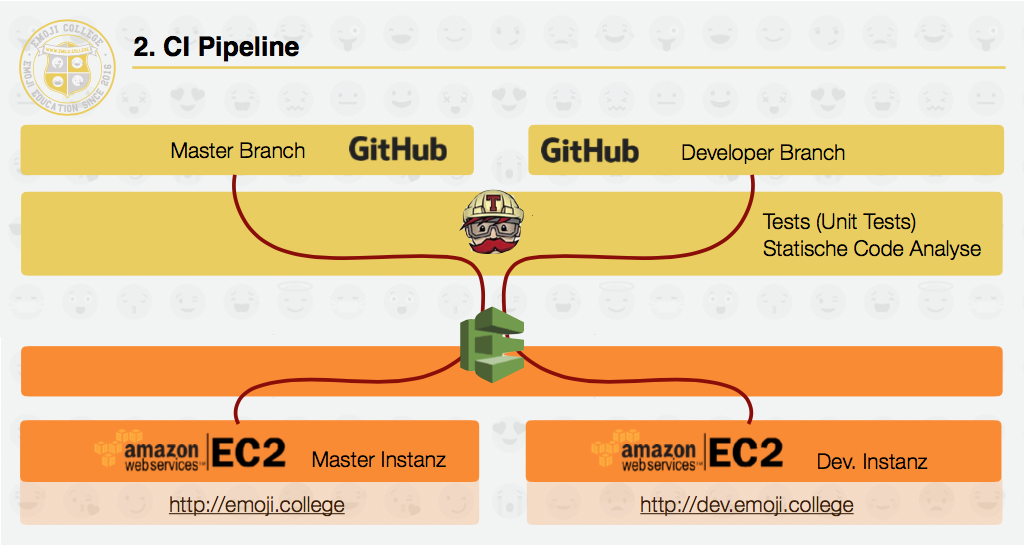
Continuous Integration with Travis CI and Amazon Webservices
Introduction In the the course Software Engineering and Management and Interactive Media at Stuttgart Media University, we launched an interactive web application called Emoji College. www.emoji.college The following blog entry is a brief description of what is going on in this project. The main focus relies on the implementation of a continuous integration pipeline with…
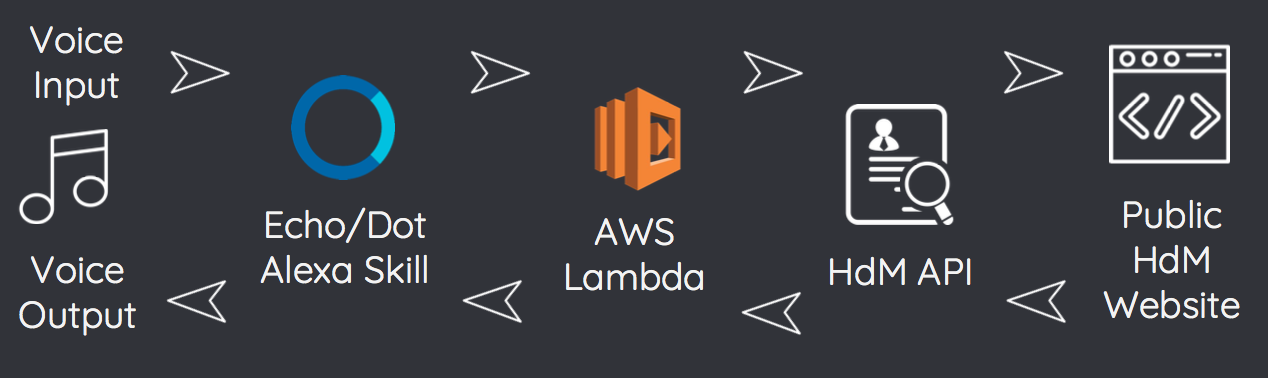
Building an HdM Alexa Skill – Part 2
We present our own HdM Alexa Skill and share the experience we gained throughout this project. This time: Decisions, Developed Modules and Implementation.

Building a HdM Alexa Skill – Part 1
We present our own HdM Alexa Skill and share the experience we gained throughout this project.
Automate deployment with the Unreal Engine using the Unreal Automation Tool (UAT)
Documentation and Getting started guide for the Unreal Automation Tool (UAT) and Unreal Build Tool (UBT) included in the Unreal Engine 4.
Scheme Interpreter
Introduction In the the course Software Engineering and Management and Design and implementation progressed programing languages at Stuttgart Media University, I developed an own Interpreter. About the Interpreter The syntax of this interpreter is based on the „lips“ family, a programming language which is structured in lists (definition). This type of programming language is very…
Buzzwords
AI Amazon Web Services architecture artificial intelligence AWS AWS Lambda Ci-Pipeline CI/CD Cloud Cloud-Computing Cloud Computing Containers Continuous Integration deep learning DevOps distributed systems Docker Enterprise IT Git gitlab Gitlab CI IBM Bluemix Jenkins Kubernetes Linux loadbalancing machine learning Microservices Monitoring Node.js Python scaling secure systems security serverless social media Sustainability System Engineering System Engineering and Management Terraform Test-Driven Development Testing ULS ultra large scale systems Web Performance